
Shaping Glass Art
One of the most frequent questions I get asked about glass fusing is how it gets its shape. This transformative process is known as "slumping" which is when glass is slowly heated INTO a concave surface to obtain a shape. “Draping” is very similar; glass is heated OVER a convex surface to obtain a shape.
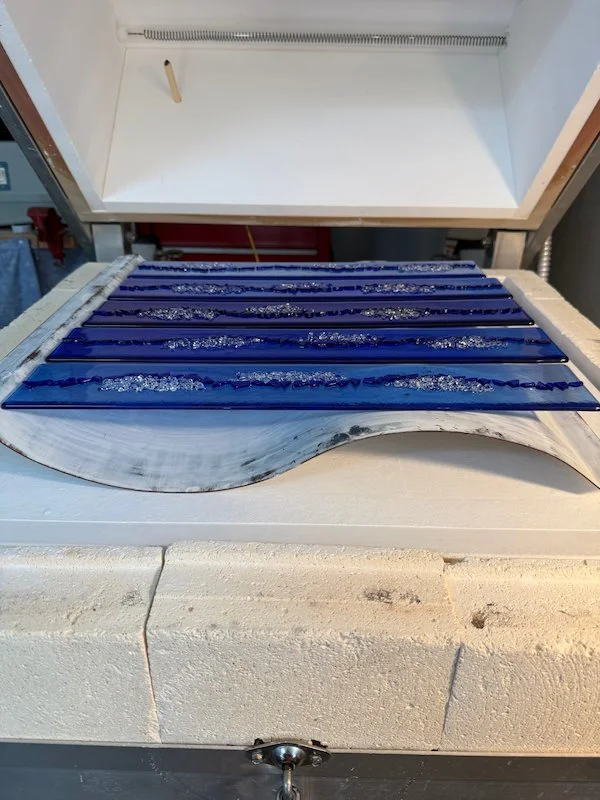
The glass pieces have already been fused (twice actually) and are in one of my kilns getting ready for the slumping firing.
“Draping” is very similar to slumping; glass is heated OVER a convex surface to obtain a shape. Slumping (or draping) is generally the final firing in making a finished piece of art glass; unless you want a flat wall panel. It’s the firing that I need to watch most closely as it needs to be stopped at just the right time or I’ll end up with a big puddle of melted glass. Ugh!
Are you wondering how I watch or check the glass? I literally crack the kiln open a couple of inches and peek in! Yep, it’s very hot; slumping takes place around 1225° (your mileage may vary). It can take anywhere from 15 minutes for a weighty piece – think glass bathroom sink, to 60 minutes for a delicate, lacey bowl. It’s all about time, temperature, and gravity. Once the glass starts to slump it moves fast, which is why it needs to be carefully watched.
In the glass art world, the cumulative effect of all these kiln firings is referred to as "heatwork."
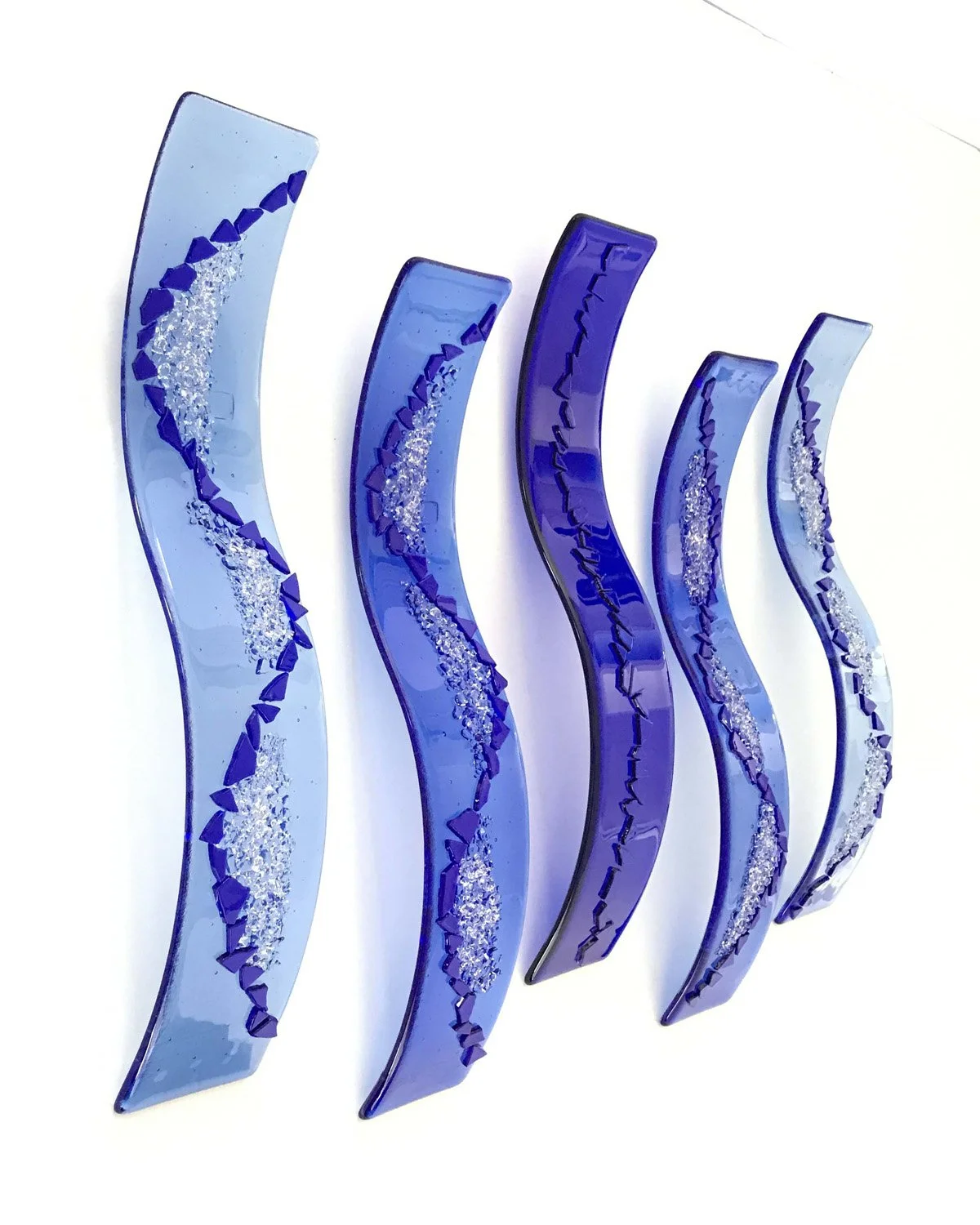
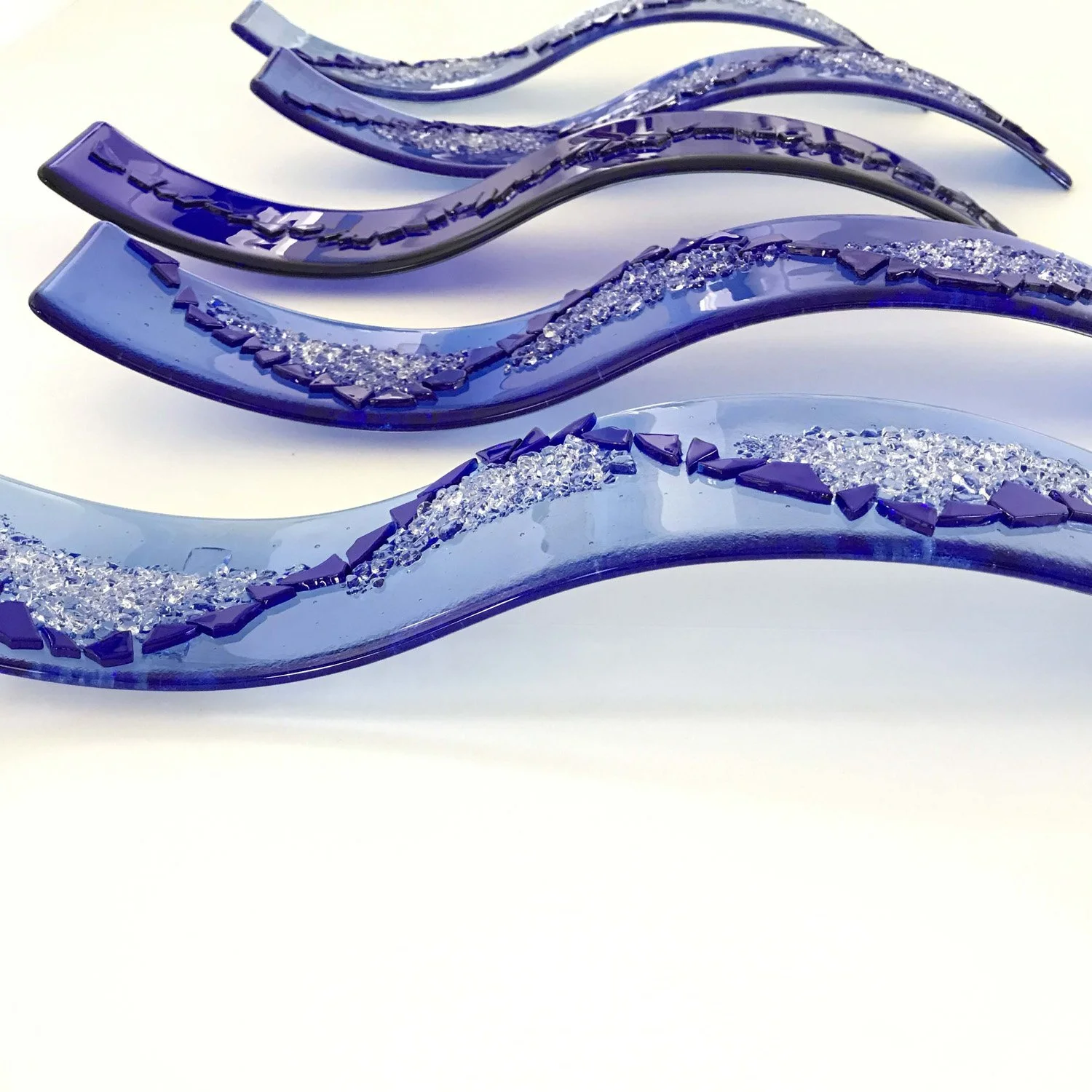
This photo shows the glass pieces after slumping in the completed shape.